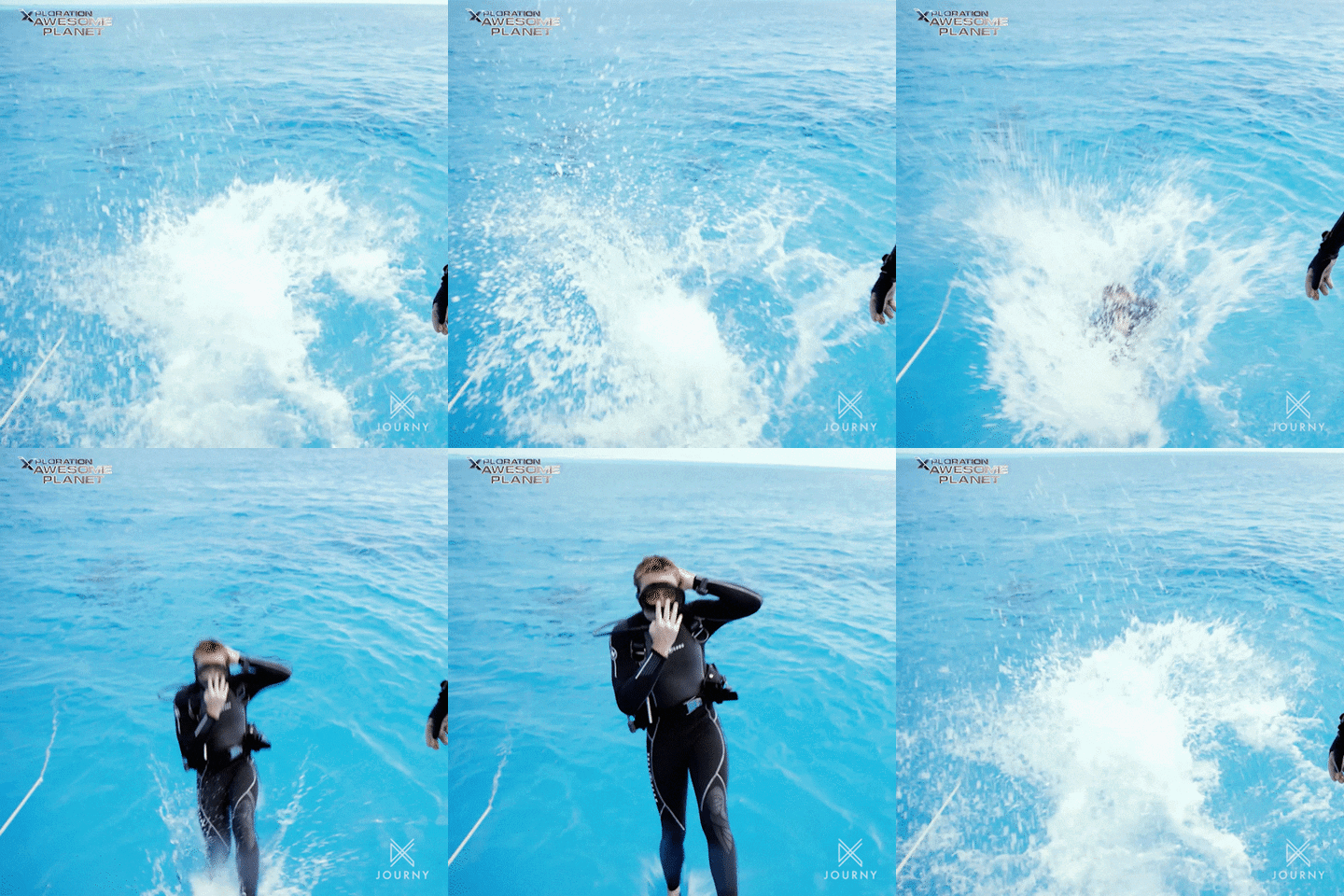
Modifying visual media via code has always been a fascination of mine. Probably because I'm not a designer and I tend to stick to what I'm good at. One visual effect I love is seeing video reversed -- it provides a sometimes hilarious perspective on a given event.
Take this reversed water effect for example:
To reverse an animated GIF or video, you can use the ImageMagick library:
If you're interested in media engineering, check out my previous ImageMagick tutorials. These awesome media libraries are as close to an artist I will ever get!
With CSS border-radius, I showed you how CSS can bridge the gap between design and development by adding rounded corners to elements. CSS gradients are another step in that direction. Now that CSS gradients are supported in Internet Explorer 8+, Firefox, Safari, and Chrome...
I work with an awesome cast of developers at Mozilla, and one of them in Daniel Buchner. Daniel's shared with me an awesome strategy for detecting when nodes have been injected into a parent node without using the deprecated DOM Events API.
Twitter does some great stuff with JavaScript. What I really appreciate about what they do is that there aren't any epic JS functionalities -- they're all simple touches. One of those simple touches is the "Login" dropdown on their homepage. I've taken...