iPhone-Style Password Inputs with Appcelerator Titanium
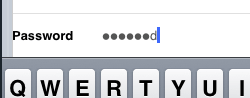
Most mobile applications ask you for your credential so that they may verify your account and pull information via an API. My mobile application is no different. The problem I ran into was that I couldn't find the method by which to emulate the iPhone's password field behavior. Luckily a quick search gave me the answer:
// Create the text field
var formElement = Titanium.UI.createTextField({
	value: "",
	width: 100,
	height: "auto",
	hintText: "Password",
	passwordMask: true
});
Setting the passwordMask property to true provides the true iPhone-style password masking that I desired. Now all but the last letter in the password are properly hidden!
![fetch API]()
One of the worst kept secrets about AJAX on the web is that the underlying API for it, XMLHttpRequest, wasn't really made for what we've been using it for. We've done well to create elegant APIs around XHR but we know we can do better. Our effort to...
![39 Shirts – Leaving Mozilla]()
In 2001 I had just graduated from a small town high school and headed off to a small town college. I found myself in the quaint computer lab where the substandard computers featured two browsers: Internet Explorer and Mozilla. It was this lab where I fell...
![dwImageProtector Plugin for jQuery]()
I've always been curious about the jQuery JavaScript library. jQuery has captured the hearts of web designers and developers everywhere and I've always wondered why. I've been told it's easy, which is probably why designers were so quick to adopt it NOT that designers...
![SmoothScroll Using MooTools 1.2]()







Good, that was what I search and arrive here ;)