JavaScript Coding with Class

I've spent the last two weeks in London, eating fish'n'chips, drinking cup'o'tea, and being a hooligan at the Arsenal. Oh yeah, there was a MooTools hackathon too. The MooTools hackathon was hugely successful and I'll be providing more detail about what was accomplished and where MooTools is going over the coming weeks. It was also great to meet some of the development team in person instead of simple IRC. MooTools FTW!
Another exciting part of my time in London was presenting at London Ajax. My presentation was called "JavaScript Coding with Class", preaching the values of class-based JavaScript frameworks like MooTools and Dojo. I kept the talk high-level but I'm confident I got my point across, showing the value of class structures.
This was my first time presenting this deck, so let me know if you see room for improvement (outside of the billion "um's" I used.)
Due to popular request, my slides have been embedded above.
![Responsive Images: The Ultimate Guide]()
Chances are that any Web designers using our Ghostlab browser testing app, which allows seamless testing across all devices simultaneously, will have worked with responsive design in some shape or form. And as today's websites and devices become ever more varied, a plethora of responsive images...
![Responsive and Infinitely Scalable JS Animations]()
Back in late 2012 it was not easy to find open source projects using requestAnimationFrame() - this is the hook that allows Javascript code to synchronize with a web browser's native paint loop. Animations using this method can run at 60 fps and deliver fantastic...
![Animated Progress Bars Using MooTools: dwProgressBar]()
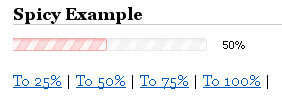
I love progress bars. It's important that I know roughly what percentage of a task is complete. I've created a highly customizable MooTools progress bar class that animates to the desired percentage.
The Moo-Generated XHTML
This DIV structure is extremely simple and can be controlled...
![Unicode CSS Classes]()
CSS class name structure and consistency is really important; some developers camelcase classnames, others use dashes, and others use underscores. One thing I've learned when toying around by HTML and CSS class names is that you can actually use unicode symbols and icons as classnames.





There was one question I wanted to ask you on Tuesday: Do you think JavaScript is ever going to get proper built-in class support? What is is the likelihood of that? What is preventing this from happening?
I doubt it — it takes forever to get official changes to the ECMAScript standard, and Google seems intent on killing JavaScript.