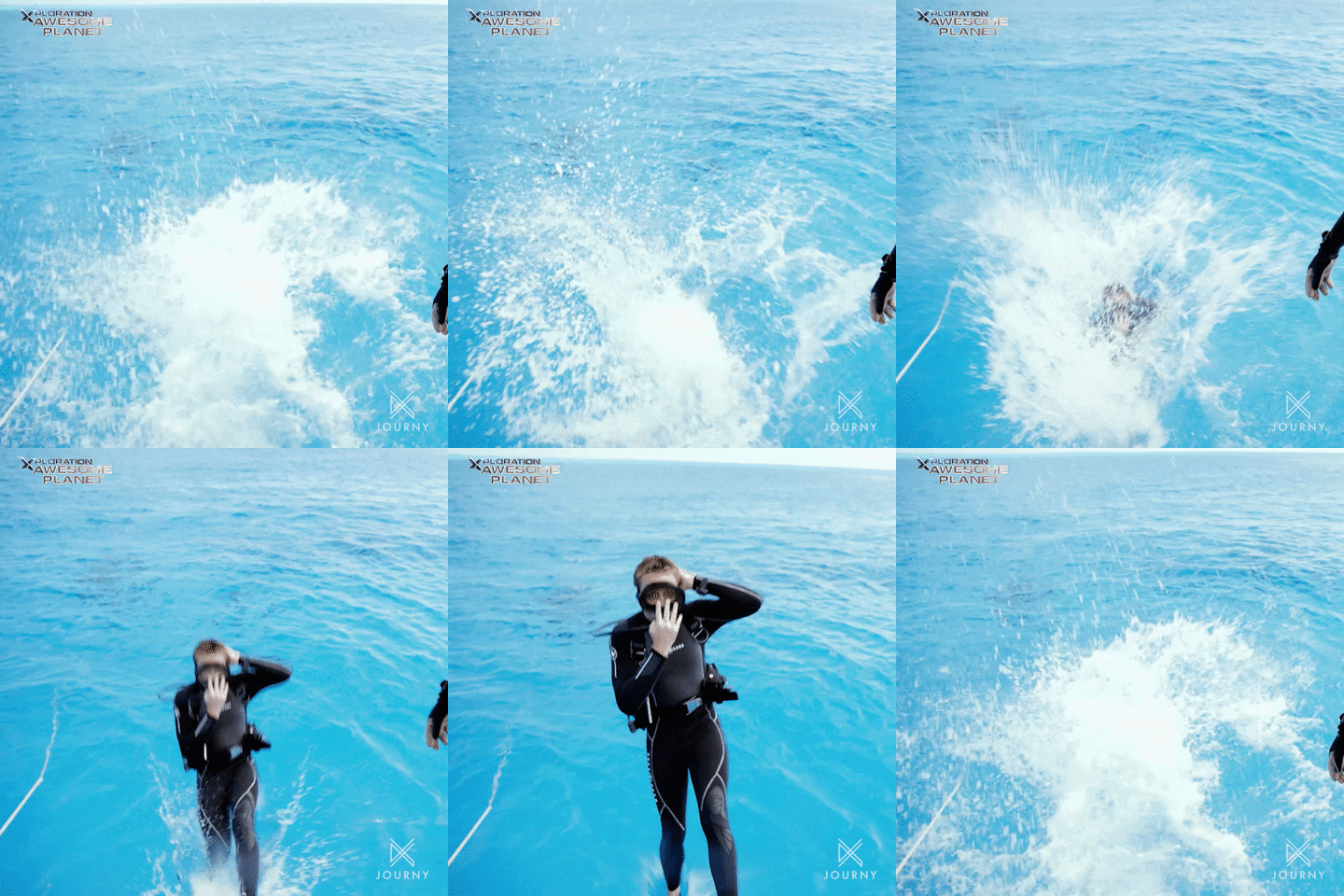
Modifying visual media via code has always been a fascination of mine. Probably because I'm not a designer and I tend to stick to what I'm good at. One visual effect I love is seeing video reversed -- it provides a sometimes hilarious perspective on a given event.
Take this reversed water effect for example:
To reverse an animated GIF or video, you can use the ImageMagick library:
If you're interested in media engineering, check out my previous ImageMagick tutorials. These awesome media libraries are as close to an artist I will ever get!
I get asked loads of questions every day but I'm always surprised that they're rarely questions about code or even tech -- many of the questions I get are more about non-dev stuff like what my office is like, what software I use, and oftentimes...
I love almost every part of being a tech blogger: learning, preaching, bantering, researching. The one part about blogging that I absolutely loathe: dealing with SPAM comments. For the past two years, my blog has registered 8,000+ SPAM comments per day. PER DAY. Bloating my database...
Although it's possible to achieve opacity using CSS, the hacks involved aren't pretty. If you're using the MooTools JavaScript library, opacity is as easy as using an element's "set" method. The following MooTools snippet takes every image with the "opacity" class and sets...
We all know that we can set a different link color (among other properties) on the hover event, but why not show a little bit more dynamism by making the original color fade to the next? Using MooTools 1.2, you can achieve that effect.
The MooTools...