Get WiFi Password from Command Line
I met Guillermo Rauch several years ago in the #mootools-dev room on IRC. He jumped into the MooTools project and made great things happen; he also coded MooTools' plugins forge. Since then he's gone on to create amazing things, most recently releasing HyperTerm, an excellent terminal app for Mac. I was recently browsing his GitHub repo list and found a goldmine of work but one quickly stuck out: wifi-password.
Have you ever been at a coworking location, a bar or restaurant, or your friend's house and someone asks you for the wifi password? You don't remember, of course, and the signs posting it are no longer up. What do you do? You grab wifi-password!
Once you've cloned wifi-password, you run the utility while you're connected to the network:
./wifi-password
Wait a moment and the wifi password is output to your command line:
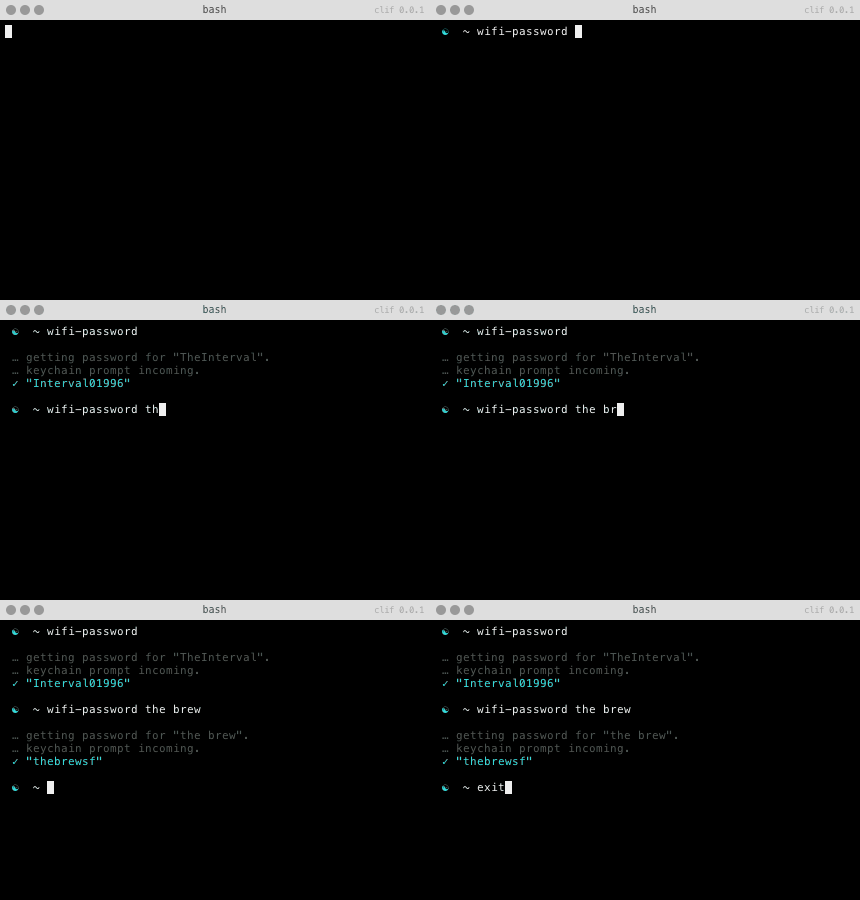
I can think of dozens of instances when this would've done me well. Being able to retrieve passwords from any app or network is incredibly useful when on the go!
![5 HTML5 APIs You Didn’t Know Existed]()
When you say or read "HTML5", you half expect exotic dancers and unicorns to walk into the room to the tune of "I'm Sexy and I Know It." Can you blame us though? We watched the fundamental APIs stagnate for so long that a basic feature...
![9 Mind-Blowing WebGL Demos]()
As much as developers now loathe Flash, we're still playing a bit of catch up to natively duplicate the animation capabilities that Adobe's old technology provided us. Of course we have canvas, an awesome technology, one which I highlighted 9 mind-blowing demos. Another technology available...
![Sliding Labels Using MooTools]()
A week back I saw a great effect created by CSSKarma: input labels being animated horizontally. The idea is everything positive: elegant, practical, unobtrusive, and requires very little jQuery code. Luckily the effect doesn't require much MooTools code either!
The HTML
A...
![Using MooTools to Instruct Google Analytics to Track Outbound Links]()
Google Analytics provides a wealth of information about who's coming to your website. One of the most important statistics the service provides is the referrer statistic -- you've gotta know who's sending people to your website, right? What about where you send others though?






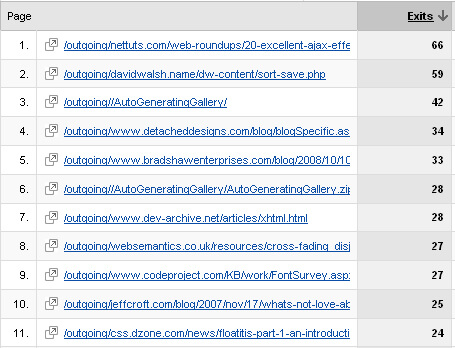
You can also just do the following: