My Thoughts on CSS Naked Day
I've received numerous questions about this over the past two days so I might as well address it. As you probably know, this Wednesday was CSS Naked Day. CSS Naked Day's "official" website says the following about why you should do this:
The idea behind this event is to promote Web Standards. Plain and simple. This includes proper use of (x)html, semantic markup, a good hierarchy structure, and of course, a good 'ol play on words. It's time to show off your <body>.
While the idea is creative, I wasn't compelled to "expose" my website's <body>. I think the best way to appreciate XHTML, semantic markup, and Web Standards is to just do it. Truth be told, none of my readers want to come to my website and see an unstyled XHTML document. I'm sure advertisers would be thrilled with it too.
It's a really cool idea but it just wasn't practical for my blog.
![CSS Animations Between Media Queries]()
CSS animations are right up there with sliced bread. CSS animations are efficient because they can be hardware accelerated, they require no JavaScript overhead, and they are composed of very little CSS code. Quite often we add CSS transforms to elements via CSS during...
![Camera and Video Control with HTML5]()
Client-side APIs on mobile and desktop devices are quickly providing the same APIs. Of course our mobile devices got access to some of these APIs first, but those APIs are slowly making their way to the desktop. One of those APIs is the getUserMedia API...
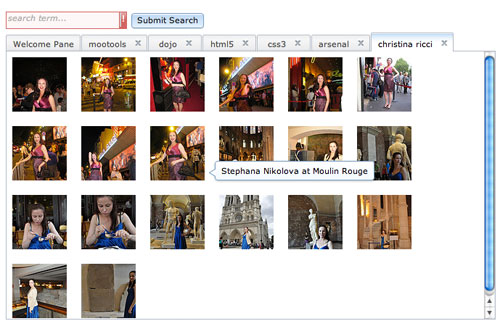
![Create a Dynamic Flickr Image Search with the Dojo Toolkit]()
The Dojo Toolkit is a treasure chest of great JavaScript classes. You can find basic JavaScript functionality classes for AJAX, node manipulation, animations, and the like within Dojo. You can find elegant, functional UI widgets like DropDown Menus, tabbed interfaces, and form element replacements within...
![Resize an Image Using Canvas, Drag and Drop and the File API]()
Recently I was asked to create a user interface that allows someone to upload an image
to a server (among other things) so that it could be used in the various web sites my
company provides to its clients. Normally this would be an easy task—create a...





I have to agree with you – all it serves to do is alienate and confuse anyone visting your site who is unaware of the idea (which would be roughly everyone).
Every day is CSS Naked Day in a way. Anyone could just turn off styles with the Web Developer extension. Now to work on something similar for humans… ;)
@Eric: Agreed and AGREED!
Forget about the advertisers for one day. Give your readers more credit. @Phil may be confused by pure content but your average tech reader wouldn’t. @Eric is right we know how to turn off styles, but that just begs the question: Is your content be well formed enough to exist without css?
We `Developers` know how to turn off css but the adverage user wouldn’t know how too/or want too. So I disagree that ‘Anyone’ could do this. ‘Anyone with the knowledge’ could.