My Thoughts on CSS Naked Day

I've received numerous questions about this over the past two days so I might as well address it. As you probably know, this Wednesday was CSS Naked Day. CSS Naked Day's "official" website says the following about why you should do this:
The idea behind this event is to promote Web Standards. Plain and simple. This includes proper use of (x)html, semantic markup, a good hierarchy structure, and of course, a good 'ol play on words. It's time to show off your <body>.
While the idea is creative, I wasn't compelled to "expose" my website's <body>. I think the best way to appreciate XHTML, semantic markup, and Web Standards is to just do it. Truth be told, none of my readers want to come to my website and see an unstyled XHTML document. I'm sure advertisers would be thrilled with it too.
It's a really cool idea but it just wasn't practical for my blog.
![Detect DOM Node Insertions with JavaScript and CSS Animations]()
I work with an awesome cast of developers at Mozilla, and one of them in Daniel Buchner. Daniel's shared with me an awesome strategy for detecting when nodes have been injected into a parent node without using the deprecated DOM Events API.
![An Interview with Eric Meyer]()
Your early CSS books were instrumental in pushing my love for front end technologies. What was it about CSS that you fell in love with and drove you to write about it?
At first blush, it was the simplicity of it as compared to the table-and-spacer...
![CSS Counters]()
Counters. They were a staple of the Geocities / early web scene that many of us "older" developers grew up with; a feature then, the butt of web jokes now. CSS has implemented its own type of counter, one more sane and straight-forward than the ole...
![Google-Style Element Fading Using MooTools or jQuery]()
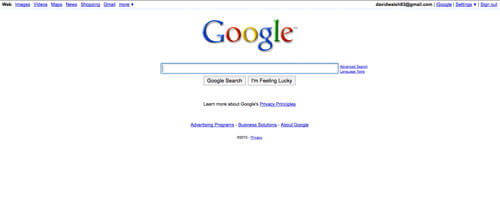
Google recently introduced an interesting effect to their homepage: the top left and top right navigation items don't display until you move your mouse or leave the search term box. Why? I can only speculate that they want their homepage as...






I have to agree with you – all it serves to do is alienate and confuse anyone visting your site who is unaware of the idea (which would be roughly everyone).
Every day is CSS Naked Day in a way. Anyone could just turn off styles with the Web Developer extension. Now to work on something similar for humans… ;)
@Eric: Agreed and AGREED!
Forget about the advertisers for one day. Give your readers more credit. @Phil may be confused by pure content but your average tech reader wouldn’t. @Eric is right we know how to turn off styles, but that just begs the question: Is your content be well formed enough to exist without css?
We `Developers` know how to turn off css but the adverage user wouldn’t know how too/or want too. So I disagree that ‘Anyone’ could do this. ‘Anyone with the knowledge’ could.