APIs Tutorials
![Five Top Quality APIs]()
Five Top Quality APIs
It's easy to think about creating beautiful UIs for presenting data when you don't consider the effort that goes into gathering and serving the data itself. Here's the thing -- thanks to apilayer, you can focus on your UIs and not the pain of API...
![Automatically Rebase GitHub Pull Requests]()
Automatically Rebase GitHub Pull Requests
Working on an open source project with a thriving contribution community is one of the great joys I have at Mozilla. In leading this charge, I get to meet amazing people of all different skill sets and interests, as well as different points of...


![Amazing User Agent API with userstack]()
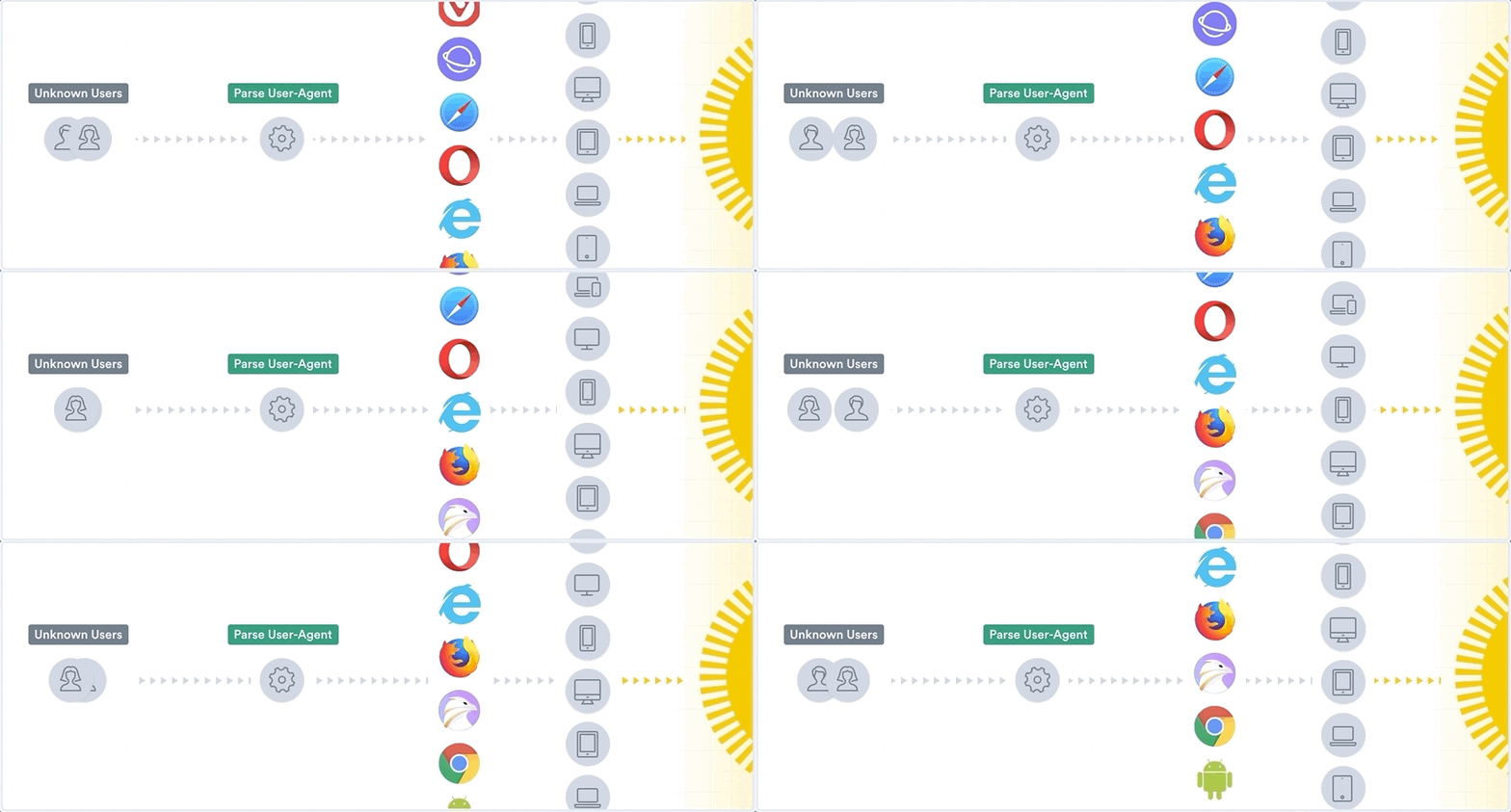
Amazing User Agent API with userstack
We do our best to design and code websites so that they look and perform the way they should regardless of device or browser, but the truth is we sometimes we need to code for specific device, browser, or crawler. Whether it's a quick hack or...
![5 Awesome New Mozilla Technologies You’ve Never Heard Of]()
5 Awesome New Mozilla Technologies You’ve Never Heard Of
My trip to Mozilla Summit 2013 was incredible. I've spent so much time focusing on my project that I had lost sight of all of the great work Mozillians were putting out. MozSummit provided the perfect reminder of how brilliant my colleagues are and how much...
![Change Mac App Icons]()
Change Mac App Icons
If you follow me on Twitter, you know that I recently got a new MacBook Pro. Setting up a new machine is a pornographic euphoric experience: no app collisions, optimal performance, and a fresh canvas to work with. The first step is setting up your...
-
![Using Font Awesome Icons without <i> Tags]()
Using Font Awesome Icons without <i> Tags
If you've not used glyph icon libraries like Font Awesome before, you're really missing out. They're incredibly useful, flexible, and are easy to implement via markup. The normal method for using font awesome is by using an <i> element with an icon-specific CSS class: This...
![Chris Coyier’s Favorite CodePen Demos]()
Chris Coyier’s Favorite CodePen Demos
David asked me if I'd be up for a guest post picking out some of my favorite Pens from CodePen. A daunting task! There are so many! I managed to pick a few though that have blown me away over the past few months. If you...
![Prism Line Number Plugin]()
Prism Line Number Plugin
The Mozilla Developer Network (MDN) is in the midst of a remodel (sorry for the spoiler) and we've been implementing features incrementally. One larger front-end change we'll be implementing is using the PrismJS for document code syntax highlighting. One requirement of MDN's syntax highlighter...

![How to Create a Twitter Card]()
How to Create a Twitter Card
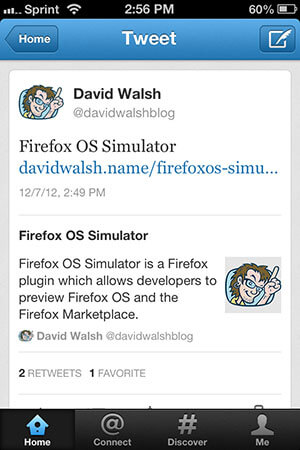
One of my favorite social APIs was the Open Graph API adopted by Facebook. Adding just a few META tags to each page allowed links to my article to be styled and presented the way I wanted them to, giving me a bit of control...
![Xbox Live Gamer API]()
Xbox Live Gamer API
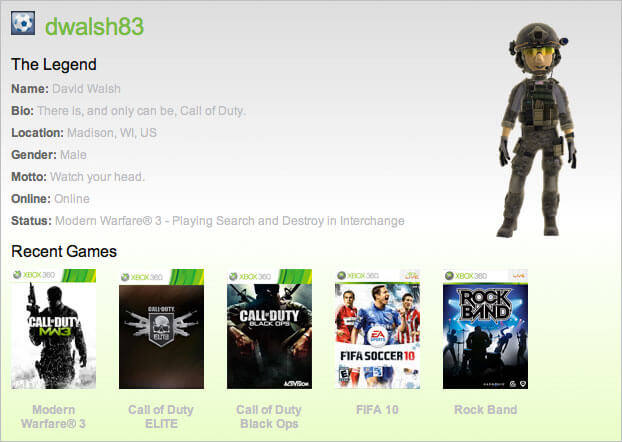
My sharpshooter status aside, I've always been surprised upset that Microsoft has never provided an API for the vast amount of information about users, the games they play, and statistics within the games. Namely, I'd like to publicly shame every n00b I've baptized with my...